
If you are a nurse, particularly a white nurse, working in postpartum or NICU and teaching new parents how to breastfeed, it is vital that you understand the history of breastfeeding among Black women. Up until late in the last century, Black women were still employed as wet nurses for White families. This robs a Black woman’s own child of nutrition. It also explains why many Black women have a negative connotation with breastfeeding. Rather than blindly push forward with lactation education, nurses need to work to further develop cultural competence and understand why Black women may choose not to breastfeed, and why their relatives may encourage them NOT to breastfeed.
Ultimately, breastfeeding should be the choice of the individual involved, not the choice of a nurse or family members surrounding the new parent.
@FeministaJones made a series of tweets regarding the history of breastfeeding and black women, as well…
View original post 1,692 more words
Uniforms and Fairy Dust
January 30, 2015
Why do new parents seem so guarded or opinionated or defensive? Well, much of it is that they are protecting their new family.
Another thing I have noticed is that parents feel they have to subscribe to a specific style. In the years since I first became a new mom – over nineteen years ago, I have noticed that so much around parenting is trademarked. I believe that is all about marketing. I have written about how poor parents are the biggest target of marketing these days.
I remember when it was time to start feeding Phoebe solid food a mom at a La Leche League meeting suggested baby led weaning. This made sense to me – let her take food off the table – I would bite off a tiny piece of apple and let her chew it, I would continue to nurse her. Eventually I became a La Leche League Leader. A couple of years back at a meeting I was leading for toddlers a mom mentioned baby led weaning and I was thrilled to hear this concept being embraced until I heard about all the “rules around it. Rules? There is a book! Wow. I thought it was about being instinctive with a few guidelines about what foods to give and which foods to avoid so that they would not choke.

I also noticed how people would comment on how attached Phoebe and I were. Of course, I am her mom, we are together (the company I worked for closed while I was on maternity leave and I was a full time mom then.) Then I learned there is an organization called Attachment Parenting – which I love! But I hear moms asking, “Is it is AP to . . . “ Or “does it go against AP if I . . .”
Then there are the breast feeders and the bottle feeders and the co-sleepers and the baby never comes into my bed, and there are “Never let the baby cry” and the Cry It Outs.
I belong to way too many groups on Facebook and I hear so many new moms asking permission to go outside of the rules of whichever category they have chosen to join. I hear arguments about how you cannot do this or you should do that.
Titles: Tiger Mom, Hippie Mom, Crunchy Mom, Stay At Home Mom, Working Mom
Does one need only belong to one “club?” Does anyone only do things exactly as planned out in a book? Do breastfeeding moms never give their babies a bottle? Do most parents have their kids in their bed at least some of the time? Do the families that make their own baby food sometimes use a jar or sometimes eat convenient food? Do the touchy feely moms yell? Does the Tiger mom cuddle? Does the home-schooling mom want to send her kid away to boarding school? Does the mom with the most awesome and fulfilling career want to quit her job and stay home?
If you asked these questions to these parents you would get a resounding YES from time to time.
It seems like a new mom has to wear armor to defend herself and her choices. She has to seek permission to care for her baby. Whatever happened to instincts? Have we cultured intuition away by writing books and coining phrases and categorizing everything and everyone?
Maybe the extended family has done things differently so a new mom feels she needs to defend her choices. Perhaps she is faced with criticism and needs to wear a uniform.
Whatever it is I wish I could hug all new moms and blow some instinct like fairy dust at them and let them take it in, take in their babies. I want them to clear out the noise so they can hear. So they can hear that voice inside them that tells them: this is your baby, your child, do not strive to fit in, strive to find love, strive to find the wonder in your little person, strive to grow along with them.

In the meantime I will interject my thoughts in those groups when I have it in me to do so. I imagine fairy dust with each click of the keyboard.
Working and Breastfeeding: An Interview With Nancy Mohrbacher
December 30, 2014

International Lactation Consultant Association® (ILCA®) Medialert Team member Leigh Anne O’Connor recently interviewed Nancy Mohrbacher. Learn more about Nancy’s approach to supporting breastfeeding working families in Leigh Anne’s interview:
I first met Nancy Mohrbacher on a hot August day into 2001. We were both guests on the Montel Williams show. Nancy was the expert guest and I was the “real person” nursing mom guest. I was quite nervous. Nancy, though she said she was nervous, possessed a calm and confident air about her, not at all cocky. She just knew her stuff.
Over the years meeting her at various conferences I always learned something new. What has impressed me and what makes her different is that her information is consistently accessible while remaining up-to-date and relevant. Nancy never stops learning and she shares her wealth of knowledge for not only professionals but for breastfeeding families.
The information Nancy has…
View original post 980 more words
Sweet Sleep and the Sleep Experts
November 19, 2014
This morning I attended a panel discussion of the Children’s Health Council at Cornell Weill Medical College on New York City’s upper east side. The topic was Tots to Teens: Sleep and Your Child.
The panelists were Vikash K. Modi, M.D., FAAP, Haviva Veler, M.D. and Mary J. Ward, Ph.D.
The topics they addressed are the things I discuss with my clients: routine, rhythm and consistency for good sleep hygiene. The topic of co-sleeping was mentioned but was never actually addressed during the panel discussion. It was great to hear these panelists discuss normal sleep behavior and when medical conditions get in the way.
Then they talked about the importance of letting babies learn to sleep on their own. They even encouraged Cry It Out. What was especially compelling was the fact that the two moms on the panel confessed their own discomfort with letting their own babies Cry It Out. I was relieved to hear this because it confirmed I was listening to real people with real life experience. But I wonder why. Why they have expectations that others should “do as they say, not as they do?”
They discussed the problems of electronics and irregular schedules. They discussed how light disrupts the excretion of melatonin.
They never discussed diet. They touched on allergies, mostly airborne allergies causing inflamed adenoids and obstructing airways. But they did not discuss what and how babies are fed. I wonder if they considered this in their research.
They talked about sleep associations like music, blankets and parents. They insist these “objects” need to not be there when the baby falls asleep or they will need these associations when they wake in the middle of the night. They did not discuss breastmilk or the melatonin levels that change throughout the day to help babies to sleep more. They discussed circadian rhythms.
I learned the two factors that determine the need for sleep are 1)circadian rhythms and 2)how much time has elapsed between sleep sessions.
During the Question & Answer period there were many parents asking about their own children’s sleep issues. Luckily I got a chance to ask my question. Into the microphone, I spoke, “I am a Private Practice Lactation Consultant and one of my favorite things to show new families is how to SAFELY lay down and nurse their babies and to know how to SAFELY fall asleep if that were to happen. Why then when families pass into the borders of the United States do their bodies suddenly become dangerous?”
Dr. Ward admitted that she may be biased toward Western philosophy and mentioned a study that showed most parents do not like sleeping with their babies or children.
It made me wonder if the participants in that study answered that they don’t like it because they are conditioned to think it is bad? Are they conditioned culturally to think that babies are not supposed to cross the border of the marriage bed? Maybe I am reading too much into it. Maybe my personal bias towards wanting more sleep and wanting to breastfeed comfortably colors my thoughts on this controversy.
Gerald M. Laughlin, M.D. suggested that in this country the mattresses on adult beds as so soft as to cause suffocation as opposed to the hard mattresses in Asia where co-sleeping is the norm. I am not an anthropologist but I do sit on a lot of beds and very few I have examined are soft enough to cause a risk for babies.
Dr. Veler stated that there is research that states that there is an increase in SIDS when sleeping with parents. I told her I have research that negates that untruth.
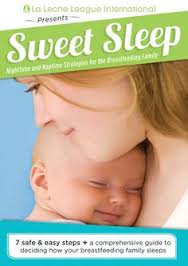
I brought along two copies of Sweet Sleep – Nightime and Naptime Strategies for the Breastfeeding Family, the new book by Diane Wiessinger, Diana West, Linda J. Smith and Teresa Pitman published by La Leche League International. This book debunks many myths around sleep. The authors really went through many studies with a fine tooth comb and proved that in specific circumstances co-sleeping is the safest for babies.
They talk about the Safe Sleep Seven. For this to work a mom needs to be:
1) a non-smoker
2) sober
3) breastfeeding
the baby needs to be:
4) full-term and healthy
5) kept on his back when he is not nursing
6) unswaddled, in a onesie or light pajamas
and they both need to be
7) on a safe surface.

This is nearly a five-hundred-page book so if you are really interested I recommend you check it out – many of those pages notes with citation of studies and research.
I gave one to Dr. Veler and the other to Dr. Loughlin.
It is my hope that these doctors will really look at them, take in the research and consider their words when they are asking parents to do what goes against their instincts.
I did take away some good information about my own older children. I learned how sleep works. My knowledge of the technology interfering with sleep is a real thing. I learned that it is absolutely normal for my thirteen year old to not want to wake up early in the morning.
I also learned that by trusting my instincts and paying attention to my children’s sleep I know what works against them getting good sleep and what helps. As babies we all slept better together. I did not mind being their sleep association “object.” It reminds me of the time when Phoebe was a toddler and she was holding onto her little red Elmo and another mom asked me, “Is Elmo her security object?” I was stunned then I realized what she was asking. “No.” I replied. “Well, what is,” she needed to know. “Um.” A beat, then “I am,” I beamed.
Those Eyes
November 13, 2014
Looking through old photos of Phoebe I was taken back to the moments she was born. The thing I remember more than the pushing, the pain, the fear of what was going on with my body, more than thinking about our apartment move as I was in labor, more than thinking about moving out of Manhattan, more than thinking of whether she would be a boy or a girl, about what we would name her, I remember those eyes. Those eyes saw right into me. More than thinking if I would be a good enough mother, more than thinking about breastfeeding I remember those eyes.
She is a young adult now and I am still taken with her eyes. Looking at this photo when she was about two years old, the image is a bit blurry but look at those eyes.

I would wonder what was going on behind those eyes, what she was thinking.
There are certain moments in mothering that leave indelible images in my mind. There was when Chloe, at three weeks of age told me she did not like the light in her eyes while she was nursing – she pulled off my breast, turned her head toward the lamp beside the bed and fake cried then turned back toward me and stopped – she repeated this action until I figured out to turn off the light. She then happily latched on and nursed herself to sleep in the dimmed room.
There was the moment when two year old Finn looked up at me, a stressed moody mama trying to get out the door and get three children to school on time on a rainy day – you know that level of stress – I began to raise my voice, speak angrily. Instead of heading my demands to get into the stroller he stopped, crossed his little arms across his chest and proclaimed, “you have to be patient, Mama.” A tear rolled down his check. I listened.
There are many stories like this but there is nothing like a first. Phoebe’s first look into my soul made me the mom I am. Never forget to look into your child’s eyes. Never forget to watch your baby’s actions. Never forget to listen to the wisdom of a two year old.

When I was a surgical resident, I donated 150 ounces of breastmilk to a woman I’d never met, a woman who had undergone a bilateral mastectomy for cancer. It was an easy decision – I had more than I could use, she had none that she could provide. This experience became a major one in my decision to specialize in breast surgery. The dichotomy of breasts fascinated me. Breasts are highly sexualized, yet the source of comfort and food to babies. Breasts can make life-sustaining milk, and they can develop a cancer in up to 1 in 8 women that can be life-threatening. It is no wonder that society’s relationship with breasts and breastfeeding is complicated.
I have had many patients (too many) in my practice who were young and pre-childbearing, or even pregnant or breastfeeding at the time of diagnosis. Most experience the same terror that Ms. Wax-Thibodeux…
View original post 662 more words
Avenue B is not a race track
October 29, 2014
Crash!
Right outside the Earth School, Tuesday morning October 28, just after 8:30am drop off. I was chatting with another mom and we were startled into silence.
Was it two cars that slammed into each other?
I peered into the street. Oh my god! The young woman splayed out on the intersection of Avenue B and 5th Street had been on a bike. I thought to myself “call 911.” Even if others are calling I will still call. I needed to do something.
I began to shake. The windshield of the mini van was shattered and dented.

Thank God she was wearing a helmet. She was conscious. People gathered around. I spoke to the dispatcher. “It is on Avenue B and 5th street in Manhattan,” I told him.
“Is there an address?”
“Is there an address?” I repeated out loud so others could help.
“There is a big school. The other businesses are closed and their gates are down.”
Sirens are heard in the distance. The thirty-something Asian couple from the van is stunned. Had he sped up to make the light?
One of the dads from school said he saw the women fly through the air.
“He was SPEEDING – GOING TOO FAST,” he said in slow motion staccato.
He saw the impact where I only heard it. I could see the impact on his face. Why am I crying?
The fire department paramedics came. The police came. The ambulance came.
I searched online to see if I could find out how she is. None of us outside the school recognized her.
This morning, Wednesday October 29 as I walked my son to school I noticed a bit of a commotion outside St. Brigid’s church on Avenue B. Could it be a funeral? I saw no hearse. The boy in the green polo shirt and khaki pants, the uniform of St. Brigid’s School, sat on the church steps holding his socked foot, crying.
“What happened?” a passerby asked.
“A cab hit his foot.”
I held tight to Finn’s hand.
After I dropped Finn to his class I passed Donna.
“I am so glad you wear a helmet.” I showed her the image of the smashed minivan windshield I captured with my phone. I heard sirens heading toward St. Brigid’s.
“You need to show that to Carol, she sometimes rides her bike without her helmet.”
I marched to Carol’s class.
“Only because I love you am I showing you this. This is where her head impacted the van. Without a helmet she would be dead. Please, please always wear a helmet.”
“I will,” she promised.
I walked around all day my body tense, my muscles tightened every time I saw a bare head on a bike.
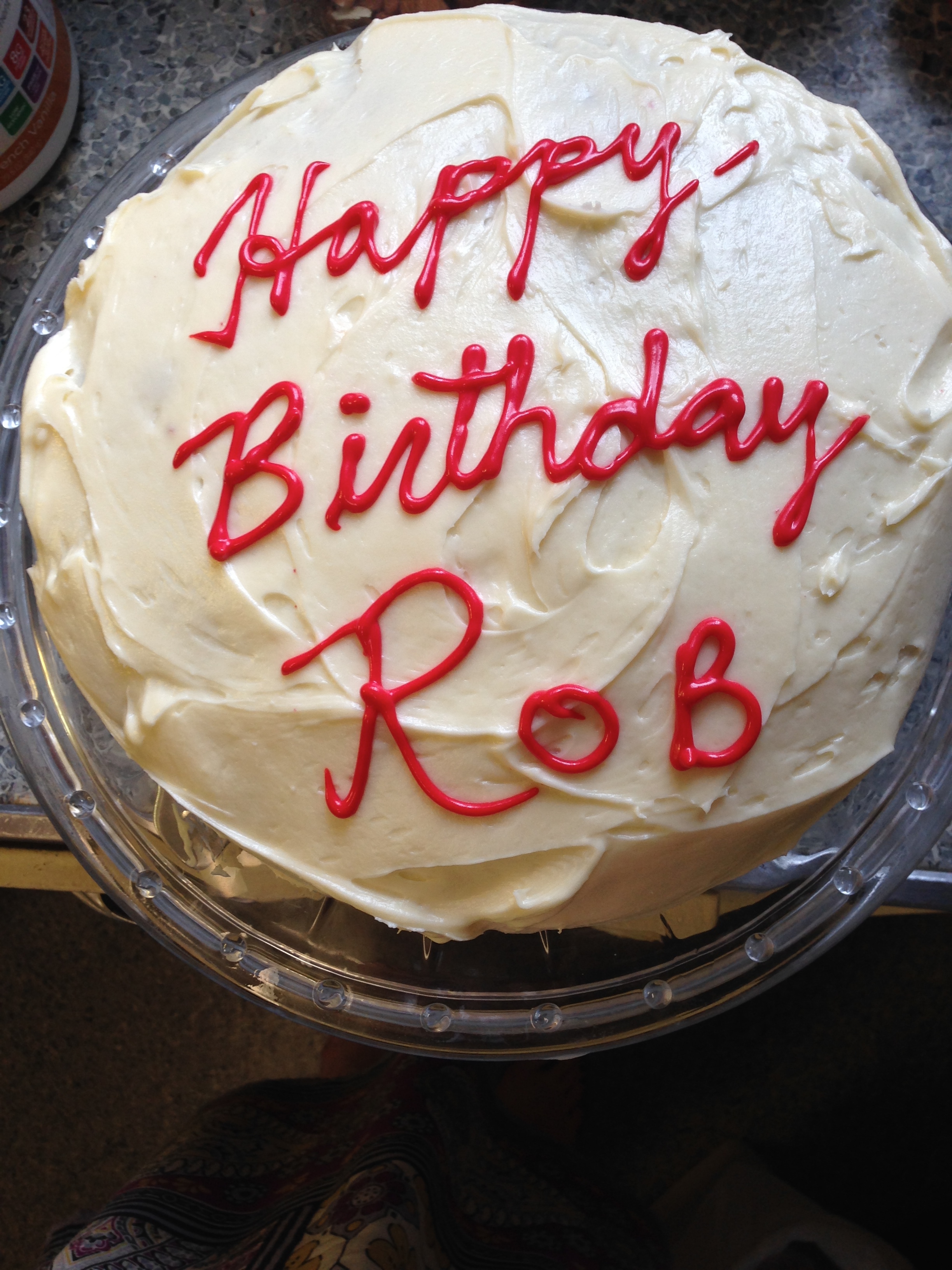
Yesterday I baked Rob a red velvet cake for his birthday – it softened my muscles, it gave me joy.
And then seeing the Catholic boy’s foot stiffened me up again.
We need to have speed bumps. We need crossing guards at every school intersection. We need to ticket speeding drivers.
Ten Years Ago (or Goodbye Mama)
October 19, 2014
Ten years ago today my mama left this earth. I wish I could say she left in a space ship or an airplane to take a ride and come back later but, no, she left permanently.
I know she is pretty mad about not being here. She loved life.

I learned a lot from my mom. I learned how to be a mom from my mom. I learned it was all right to make mistakes as long as you learned from them. I learned how to dress and put on make-up and to make sure my hair never looked a mess. Mama was very stylish. She had a keen eye for bargains and she also knew how to sew. One of my favorite memories is going to the fabric store. While Mama poured over the Butterick, Vogue and Simplicity pattern books I would walk the aisles with rows and rows of fabric. The colors and patterns caught my eyes and I loved stroking the silks, the textured corduroy, the soft felt. Much of it was tacky but Mama could find the right pattern and the right fabric and accessories and put together a sharp looking outfit for herself or a sweet dress for Traci and me. We were six years apart so often she would use the same fabric but make a different dress.

I loved watching the ladies behind the counter open the bolts and the fabric would spill over the side and then came the click of the scissors scraping off a yard or a yard and a half. Then we would make our way to the accessories area and pick out buttons, zippers, snaps – I love the snap machine! It was like a hole-puncher but you punched a snap onto the fabric. One year for Easter Mama made her and me a plaid pastel pantsuit. I loved matching Mama. It was in shades of yellow and gray with a trace of pink and the jackets closed with mother-of-pearl snaps. We layered lemon tank tops under the jackets.
Mama was always terrible at good-byes. The conversations always lingered. It would drive Rob crazy every time we drove the twelve or more hours to North Carolina and the morning we were packing to leave Mama would run into the house after a week long visit and come running out with a box or shopping bag full of stuff saying “I meant to go through this with you.” It might be a bunch of photographs or letters or some trinkets from my childhood. Something sure to engage me, distract me from leaving, from the goodbye.
When I found out Mama had lung cancer my heart cracked. I knew lung cancer was bad. That summer I made a few weekend trips alone and one week long trip with Phoebe and Chloe. Through it all Mama always stayed positive. She was determined to fight that cancer. She got mad if anyone spoke negatively about her survival.
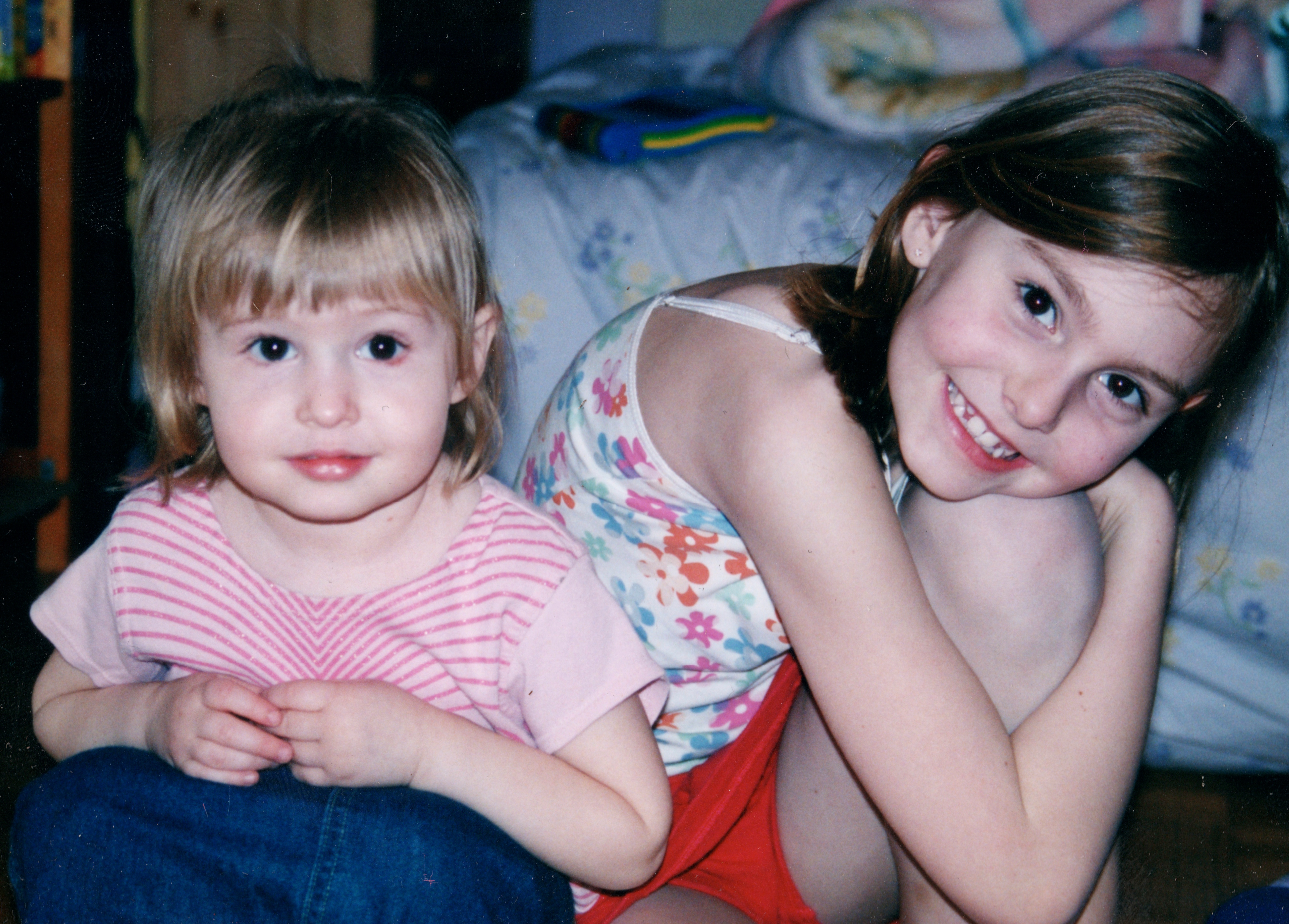
That last visit I remember looking across the living room at her and I knew she didn’t look good. It scared me. She was in Daddy’s leather recliner, asleep, with her head cocked back, the oxygen tubes forming a nearly visible mustache, which blended with her gray skin. She looked old. I fooled myself into thinking she looked this way from the chemo – which she barely had as she could not tolerate it.
That weekend Traci and I took Mama to Cato so that she could by her sister Rita something for her birthday. She chose Cato because it was close by – the mall would never have worked. We had to push Mama in a wheelchair with her oxygen tank on her lap. Traci and I were mostly quiet, listening to Mama’s frustrated directions. She chose a colorful blouse and a pretty grass green jacket. Across the crowded discount store Mama spotted a display of hats. Dragging clothes off the racks we pushed her chair to the hats. Mama considered a fuschia fedora for herself for when the chemo kicked in and she would go bald.
Earlier that summer Phoebe, Chloe and I had shopped in a vintage clothing store and bought Mama four colorful silk scarves for when her hair fell out. I remember the owner of the store being annoyed with the girls as they helped pick out the scarves. Chloe’s little hands touching the silk – that girl loved the feel of silk more than anything. At the age of one she took a silky pajama shirt of mine and cuddled it and always held onto “shirt-shirt” while she nursed. This collection of silk scarves was nearly nirvana to her and she contained herself like a true lady yet this hag gave her the eye of death. I have never given her my business again.
That last visit Mama had me pack up a sweater she had bought from the J. Jill catalog. It was her style exactly. She said she didn’t really need it, that she didn’t really like it that much. I sent it back. That same day we organized all of her insurance papers. Mama also gave me a floppy disc with a few of her short plays that I still have not had it in me to open up.
The day before I was heading back to New York, October 1, I asked Mama about Thanksgiving and Christmas. She said “you have Thanksgiving in New York, I won’t be feeling well from the chemo and then Dad and I will come to New York for Christmas.” I was so happy to have a plan for those holidays especially because I did not know what to expect. Mama died October 19, a Tuesday.
The Sunday before Mama died, Dad called to say Mama was not doing well and the doctor gave her about 10 days to two weeks. I talked to my brother, Mike. We agreed to fly to North Carolina on the same day – he from Boston, me from New York and we would drive together from the airport.
Rob arranged for his mom to come help with the girls. She came in on Tuesday. I felt raw. Tuesday, early in the day, Dad called to say Mama wasn’t doing well. I told him to tell her I love her and I didn’t want her to be in pain and if she needed to go that was fine with fine with me. That night Dad called, I answered and his words were, “ Leigh Anne, Mama’s gone.” I screamed and threw the phone. Mary picked up the phone as I lay on the floor wailing.
I traveled alone Wednesday morning. I was grumpy, agitated. The lines at the airport were long. I had checked in and asked the ticket agent about an open-ended ticket. I had to say out loud “My mom died yesterday.” It was busy and another agent was trying to board a wedding party. She went to my agent and tried to speed her up or cut the line. My lovely agent quietly pointed at the screen – the other agent looked at me and moved on, less frantic.
As I waited to remove my boots and go through security a big, blond southern Christian lady with a loud sweater, looked at me and nearly sang, “It looks like there is goin’ to be a weddin’.” There was a group of young women all carrying white dress bags. “Yes,” I replied. “Are you in a hurry? Are you from New York?” she drawled.
I looked directly at her mascaraed blue eyes and I said “My mama died last night,” as I fell into her big colorful bossom. She hugged me just right. We got through security. She was sitting in one of the chain restaurants. “Do you want some breakfast?” she sang. I thanked her and told her I was going to sit by my gate with a cup of tea.
Many things happened on that trip: planning a funeral, buying a blouse for Mama to wear in the casket, choosing a casket, choosing flowers, buying appropriate clothes for my girls to wear, writing an obituary.
Dad, Mike, Traci and I had to choose flowers for her casket. We went with red as it is elegant and because she was a Red Hat. There were these beautiful tiny red orchids – I knew Mama would have loved them. The florist sucked in her breathe – I imagine she is used to sad people – she said she did not think she would be able to get them. We were in no position to put up a fight. We accepted her statement and chose an alternative.
Traci was with Mama when she died. Traci insisted that she do Mama’s hair and make-up – none of that over the top mortician makeup. She wanted me to help her. When I woke up the next day, knowing that I had to go help Traci decorate our dead mother I cried to Daddy, “ I can write a eulogy, I can give a eulogy but I cannot dress my dead mother.”
We got through the wake. The morning of the funeral came. I wore black slacks and a black kimono style blouse splashed with bright flowers. At the funeral home Daddy takes me by the arm and says “Come on, Leigh Anne, it’s time to say goodbye to Mama.” I couldn’t believe how strong he was through all of this and he knew exactly what to do and when to do it.
I nearly collapsed in his arms as he brought me for my final goodbye. Mama taught me how to do almost everything but she did not teach me how to say goodbye to your mama. Her mama, my grandmother is still alive.
I kneeled down at the casket and I touched her hand. I did not like the cold, lifeless feel of her hand so I pulled my hand back and looked at my beautiful mom with all of her hair. She never had much chemo in the end. She was wearing an emerald silk blouse under her black pants suit. Her nails were painted red to cover the ashen color they had become.
I told her she had done such a wonderful job with us kids that we would be ok, we would miss her terribly, but we would be ok. And I told her how jealous all of my friends were because she was my mom and not theirs and that she was the best mom in the world. I had to teach myself how to say good-bye.
Her casket had the lovely red, baby orchids.

Self-soothing. Possibly the biggest lie ever foisted on parents
September 1, 2014
I am so happy to read this, I squirm when people talk about a baby self soothing. I ask patents if their baby is ready to rent their own apartment.

It figures it would be the latest propaganda about baby sleep that would wake me from my blogging slumber. This time it was news reports of a study by Dr. Marsha Weinraub, a psychologist at Temple University. In an article recently published in Developmental Psychology, she reports on data (collected 20 years ago, oddly enough) from a study which tracked patterns of nighttime sleeping and wakening in babies aged 6 to 36 months. Sleep patterns were recorded at four points in time – 6 months, 15 months, 2 years and 3 years. They found that 30% of the babies were sleeping through every night at age 6 months, while another 29% were waking one or two nights a week. The researchers decided for some reason that 30% and 29% add up to 66%, and that this means that that most babies sleep through the night at six months.
I don’t…
View original post 1,115 more words
 mamamilkandme